what are manual distractions

What are Manual Distractions? A Comprehensive Guide (Updated October 3, 2026)
Manual distractions involve any activity diverting a driver’s hands from steering, encompassing actions like eating, texting, or adjusting vehicle controls—posing significant safety risks․
Defining Manual Distractions
Manual distractions are specifically defined as any activity a driver undertakes that necessitates removing one or both hands from the steering wheel․ This encompasses a broad spectrum of actions, shifting the driver’s focus and physical control away from the primary task of operating a vehicle safely․ These distractions aren’t limited to technological devices; they include seemingly innocuous behaviors like consuming food and beverages while driving, or even personal grooming activities․
Essentially, any task requiring a driver to reach, manipulate objects, or divert their hands from the steering mechanism qualifies as a manual distraction․ This definition highlights the critical importance of maintaining consistent hand positioning on the wheel for optimal vehicle control and swift reaction times․ Recognizing these distractions is the first step towards mitigating the inherent risks they present on the road․
The Core Concept: Hands Off the Wheel
The fundamental principle underlying manual distractions centers on the compromised control experienced when a driver’s hands are not firmly positioned on the steering wheel․ Maintaining consistent contact with the wheel is paramount for responsive maneuvering and immediate reaction to unexpected events․ Any deviation from this – even momentarily – introduces a significant safety vulnerability․
This “hands off the wheel” concept isn’t merely about physical hand placement; it represents a loss of direct connection to the vehicle’s steering system; It’s about the reduced ability to quickly and accurately respond to changing road conditions, potential hazards, or the actions of other drivers․ The core issue is the diminished capacity for safe vehicle operation when hands are occupied with tasks other than steering․
How Manual Distractions Differ from Other Types
While all driving distractions are dangerous, manual distractions are uniquely defined by their physical impact on vehicle control․ They differ significantly from cognitive distractions – those affecting mental focus, like daydreaming – and visual distractions, which divert the driver’s gaze․ Manual distractions require physically removing hands from the steering wheel․
Unlike cognitive or visual impairments, a manual distraction directly impacts the driver’s ability to steer and react․ A momentary lapse in attention (cognitive) or a glance away (visual) doesn’t necessarily relinquish control․ However, reaching for a drink or adjusting the radio actively compromises the driver’s physical connection to the vehicle․ This distinction makes manual distractions particularly hazardous, demanding immediate attention to mitigate risk․

Common Examples of Manual Distractions
Common examples include reaching for objects, texting, operating entertainment systems, applying makeup, and consuming food or beverages while operating a motor vehicle․
Eating and Drinking While Driving
Consuming food and beverages while driving constitutes a significant manual distraction, demanding drivers remove their hands from the steering wheel to manage these tasks․ This seemingly innocuous act introduces considerable risk, as even a momentary lapse in control can have devastating consequences․ Reaching for a drink, unwrapping food, or attempting to eat requires visual, manual, and cognitive attention, diverting it from the primary task of safe driving․
The act of eating or drinking can significantly increase reaction time, impairing a driver’s ability to respond effectively to unexpected events on the road․ Spills or dropped items can further exacerbate the distraction, leading to panicked reactions and potential loss of vehicle control․ It’s a common, yet dangerous, habit that contributes to a substantial number of accidents annually, highlighting the need for drivers to prioritize focused attention while behind the wheel․

Using Mobile Phones (Texting, Calling, Apps)
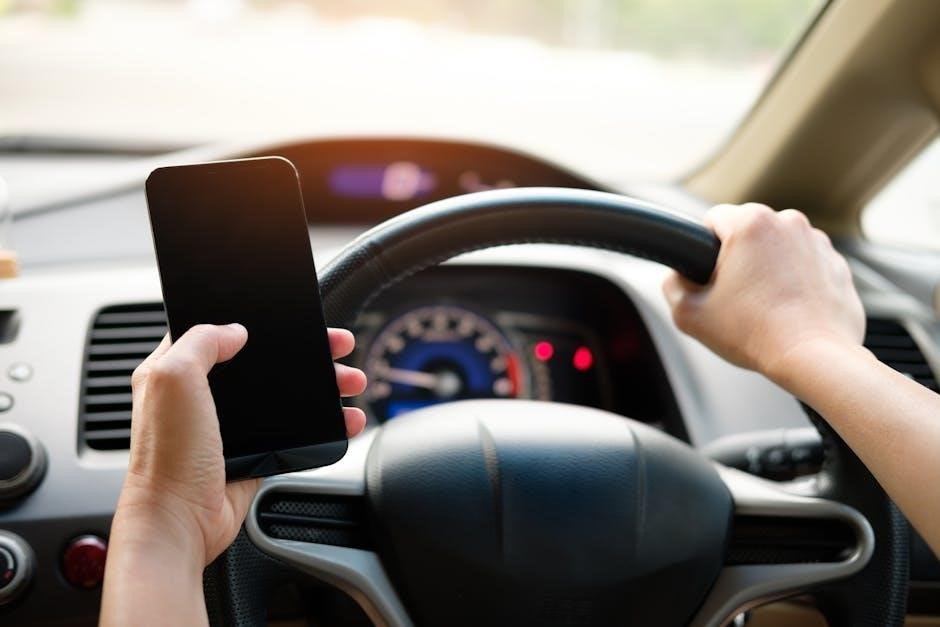
Mobile phone use represents one of the most pervasive and dangerous manual distractions in modern driving․ Activities like texting, making calls (even hands-free), and utilizing apps all demand significant attention, diverting drivers’ eyes and hands from the road․ Texting, in particular, requires visual, manual, and cognitive engagement – a triple threat to safe driving․
The temptation to quickly respond to a message or check a notification can lead to prolonged periods of distraction, increasing the risk of collisions․ Even brief glances at a phone screen can mean traveling significant distances “blind,” unable to react to changing road conditions․ Using apps, whether for navigation or entertainment, similarly pulls focus away from the driving task, creating a hazardous situation for both the driver and others on the road․
Adjusting Vehicle Controls (Radio, Navigation, Climate)
Adjusting in-vehicle controls, such as the radio, navigation system, or climate settings, constitutes a common yet hazardous manual distraction․ These seemingly minor actions require drivers to take their hands off the steering wheel and divert their visual attention from the road ahead․ Fumbling with buttons, touchscreens, or dials, even for a short duration, can significantly impair a driver’s ability to react to unexpected events․
Programming a navigation system while driving, for instance, demands considerable cognitive and visual resources, increasing the risk of missing critical traffic signals or changes in road conditions․ Similarly, changing radio stations or adjusting the temperature can momentarily compromise a driver’s focus, potentially leading to dangerous situations․ Pre-setting these controls before initiating travel is a crucial safety measure․
Grooming Activities (Applying Makeup, Hair Styling)
Engaging in grooming activities while operating a vehicle – such as applying makeup, styling hair, or shaving – represents an exceptionally dangerous form of manual distraction․ These tasks necessitate a driver to completely remove their hands from the steering wheel and fix their gaze away from the roadway․ The complexity of these actions demands significant visual and manual attention, severely compromising a driver’s situational awareness․
Even brief glances at a mirror or attempts to manage personal appearance can lead to delayed reaction times and impaired vehicle control․ The potential consequences are severe, ranging from minor collisions to life-threatening accidents․ Prioritizing safe driving practices means postponing such activities until the vehicle is safely parked and stationary․

The Risks Associated with Manual Distractions
Manual distractions drastically increase reaction time, impair vehicle control, and contribute to a higher incidence of accidents, often resulting in more severe injuries or fatalities․
Increased Reaction Time
Increased reaction time is a critical risk associated with manual distractions․ When a driver’s hands are occupied with tasks other than steering – such as eating, adjusting the radio, or using a mobile phone – their ability to respond quickly to unexpected events is significantly compromised․ This delay in reaction time can mean the difference between safely avoiding a collision and being involved in a serious accident․
Even a momentary glance away from the road or a brief removal of a hand from the wheel can extend reaction time substantially․ The brain requires a fraction of a second to process information and initiate a response; diverting attention, even briefly, disrupts this process․ This is particularly dangerous at higher speeds, where even a small delay can result in traveling a considerable distance before braking or steering․
Studies consistently demonstrate that drivers engaged in manual distractions exhibit slower brake reaction times and are less able to maintain consistent lane positioning․ This heightened risk underscores the importance of keeping both hands on the wheel and focusing undivided attention on the task of driving․
Impaired Vehicle Control
Impaired vehicle control is a direct consequence of manual distractions, significantly elevating the risk of accidents․ When drivers remove hands from the steering wheel to engage in activities like eating, texting, or adjusting vehicle settings, their ability to maintain stable and precise control of the vehicle is compromised․ This loss of control manifests in several ways, including unintentional lane drifts, erratic steering movements, and difficulty maintaining a consistent speed․
Maintaining firm contact with the steering wheel allows drivers to make subtle, yet crucial, adjustments to compensate for road conditions, wind gusts, and the movements of other vehicles․ Removing hands, even momentarily, disrupts this feedback loop, making it harder to react effectively to changing circumstances․
The degree of impairment is directly related to the duration and complexity of the distracting activity․ More demanding tasks require greater attention and longer periods of hand removal, resulting in a more substantial loss of vehicle control and a heightened risk of a collision․
Higher Accident Rates & Severity
Higher accident rates and severity are demonstrably linked to manual distractions․ Statistics consistently reveal a significant correlation between drivers engaging in hand-related distractions and an increased likelihood of being involved in a crash․ The National Highway Traffic Safety Administration (NHTSA) data underscores this alarming trend, showing a disproportionate number of accidents attributed to activities taking hands off the wheel․
Beyond simply increasing the frequency of accidents, manual distractions also contribute to greater severity․ Reduced reaction time and impaired vehicle control, as previously discussed, mean collisions are more likely to be high-impact․ This translates to a higher probability of serious injuries, or even fatalities, for both the distracted driver and other road users․
The consequences extend beyond physical harm, encompassing substantial property damage and long-term emotional trauma for all involved․ Addressing manual distractions is, therefore, paramount to enhancing road safety and minimizing the devastating impact of traffic collisions․

Legal Implications of Manual Distractions
Legal ramifications for manual distractions vary by state, often including fines and points on licenses; accidents caused by these actions can lead to lawsuits․
State Laws and Regulations
State laws concerning manual distractions are increasingly stringent, reflecting growing awareness of their dangers․ Many states have enacted handheld device bans, prohibiting drivers from holding and using cell phones for calls, texting, or accessing apps while operating a vehicle․ These laws often include escalating fines for repeat offenses․
Some jurisdictions extend restrictions to all electronic devices, while others differentiate between hands-free and handheld use․ Beyond mobile phone use, certain states specifically prohibit activities like eating or grooming while driving, recognizing these as significant manual distractions․ Regulations regarding in-vehicle infotainment systems are also evolving, with some states limiting the complexity of interfaces to minimize driver distraction․
It’s crucial for drivers to understand the specific laws in their state and any states they travel through, as penalties can vary considerably․ Consistent enforcement and public awareness campaigns are vital to ensuring compliance and promoting safer driving habits․
Penalties for Manual Distraction-Related Accidents
Penalties for accidents caused by manual distractions are becoming increasingly severe, reflecting the gravity of the offense․ Beyond standard traffic citations and fines, drivers involved in crashes linked to distracted driving can face points on their driving record, potentially leading to license suspension or revocation․
In cases involving serious injury or fatality, criminal charges – such as reckless driving or vehicular manslaughter – may be filed, carrying substantial prison sentences and hefty fines․ Civil lawsuits are also common, allowing injured parties to seek compensation for medical expenses, lost wages, and pain and suffering․
Furthermore, a conviction for distracted driving can create a permanent record, impacting future employment opportunities and insurance rates․ The financial and legal consequences underscore the critical importance of maintaining focus while behind the wheel․
Impact on Insurance Rates
A conviction for a manual distraction-related traffic violation almost invariably leads to a significant increase in auto insurance premiums․ Insurance companies view drivers with such infractions as higher risk, justifying increased rates to offset potential claims․ The extent of the increase depends on factors like the severity of the offense, the driver’s prior record, and the insurance provider’s policies․
Even a first-time offense can result in a 20-50% premium hike, and repeat offenders may face even steeper increases or policy non-renewal․ Some insurers offer usage-based insurance programs that monitor driving behavior; distracted driving detected through these systems can also trigger rate adjustments․
Maintaining a clean driving record is crucial for securing affordable insurance, and avoiding manual distractions is a key component of responsible driving and cost management․

Mitigating Manual Distractions: Staying Safe on the Road
Prioritize pre-trip setup for navigation and music, pull over for tasks, and cautiously utilize hands-free technology to minimize manual distractions while driving․
Pre-Trip Preparation (Setting Navigation, Music)
Before initiating your journey, dedicate time to meticulously prepare your vehicle’s systems․ This proactive approach significantly reduces the temptation to engage in manual distractions while driving․ Input your destination into the navigation system before putting the car in motion, ensuring a hands-free experience during travel․
Similarly, select your desired music playlist or podcast․ Adjust volume levels and queue up your entertainment choices beforehand․ This eliminates the need to fumble with controls while operating the vehicle․
Consider voice command features if available, allowing for adjustments without taking your hands off the wheel․ A well-prepared trip minimizes in-car adjustments, fostering a safer and more focused driving environment․ Remember, a few moments of preparation can drastically reduce risk․
Pulling Over to Complete Tasks
When faced with tasks requiring more than a momentary glance or adjustment, the safest course of action is to pull over to a secure location․ This includes activities like responding to text messages, making phone calls, or dealing with complex navigation adjustments․ Finding a safe spot – a parking lot or designated rest area – allows you to focus on the task without endangering yourself or others․
Resist the urge to multitask while driving․ Even brief distractions can have severe consequences․ Prioritize your safety and the safety of those around you by postponing non-essential tasks until you’ve reached your destination or a suitable stopping point․
Remember, no message or call is worth risking a collision․ Prioritize responsible driving habits and always choose safety first․
Utilizing Hands-Free Technology (with Caution)
While hands-free technology – such as Bluetooth connectivity for phone calls or voice-activated navigation – can seem like a solution, it’s crucial to use it with caution․ These systems minimize manual distraction, but they don’t eliminate cognitive distraction․ Engaging in conversations or complex commands still diverts mental focus from the primary task of driving․

Studies show that even hands-free conversations can impair reaction time and situational awareness, similar to using a handheld device․ Keep conversations brief and avoid emotionally charged discussions․ Prioritize maintaining focus on the road and your surroundings․
Remember, hands-free isn’t risk-free․ It’s a tool to reduce distraction, not eliminate it entirely․ Safe driving demands your full attention․
The Role of Technology in Addressing Manual Distractions
Innovative technologies, including driver-assistance systems and smartphone applications, are emerging to combat manual distractions and enhance road safety for all drivers․
Driver-Assistance Systems (ADAS)
Driver-Assistance Systems (ADAS) represent a significant leap forward in mitigating manual distractions and enhancing overall vehicle safety․ These technologies are designed to assist drivers with various tasks, reducing the need for them to take their hands off the wheel or divert their attention from the road․
Examples of ADAS features include lane departure warning systems, which alert drivers if they begin to drift out of their lane, and automatic emergency braking, which can automatically apply the brakes to avoid or lessen the severity of a collision․ Adaptive cruise control maintains a set distance from the vehicle ahead, reducing driver workload on long journeys․
Furthermore, systems like blind-spot monitoring and rear cross-traffic alert help drivers be more aware of their surroundings, minimizing the risk of accidents caused by manual distractions․ While ADAS is not a replacement for attentive driving, it serves as a crucial safety net, helping to prevent accidents and protect drivers and passengers․
Smartphone Apps Designed to Prevent Distracted Driving
Smartphone applications are increasingly utilized as tools to combat manual distractions and promote safer driving habits․ These apps employ various strategies to discourage phone use behind the wheel, ranging from blocking notifications to rewarding focused driving․
Some apps automatically detect when a vehicle is in motion and disable certain phone functions, such as texting and social media access․ Others offer “driving mode” features, providing a simplified interface with limited functionality․ Gamification is also common, with apps awarding points for distraction-free trips, encouraging responsible behavior․
Parental control features are available in some apps, allowing parents to monitor their teen drivers’ phone usage and receive alerts if distracted driving is detected․ While the effectiveness of these apps relies on driver compliance, they represent a proactive step towards reducing the prevalence of manual distractions on our roads․
Future Technologies & Innovations
The future of mitigating manual distractions hinges on advanced technologies seamlessly integrated into vehicles and driver-assistance systems․ Expect more sophisticated Driver-Monitoring Systems (DMS) utilizing AI to detect not just hand position, but also driver gaze and cognitive state, intervening before a distraction escalates․

Haptic feedback systems, beyond simple alerts, could subtly guide a driver’s hands back to the wheel․ Augmented reality displays projecting critical information onto the windshield, minimizing the need to look away, are also on the horizon․
Vehicle-to-Everything (V2X) communication could warn drivers of potential hazards, reducing the urge to manually check navigation or surroundings․ Ultimately, the goal is a driving experience where technology proactively prevents distractions, fostering a safer and more attentive driving environment for everyone․